
a phone case, with a little help from AI
my bumper broke, so i asked AI to help design a replacement. a model, a print, and a first fit i could actually try. next version: snugger.
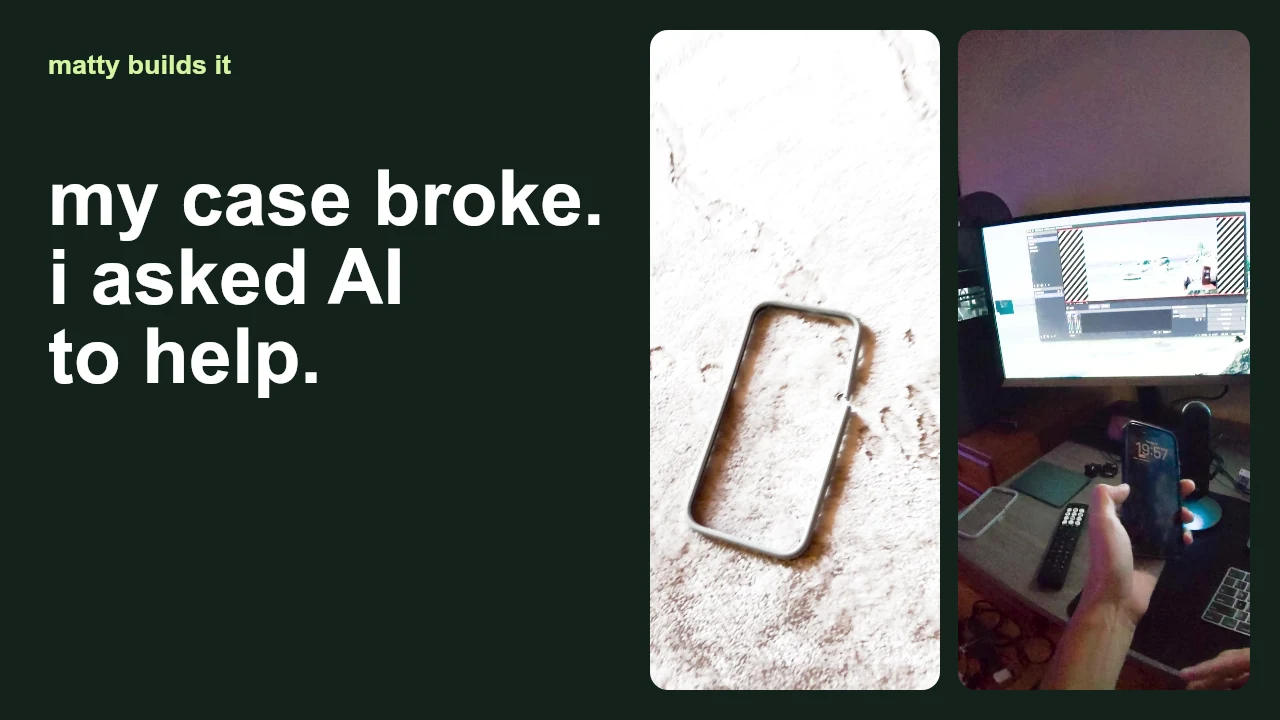
from a cracked case to a first print.
my phone case cracked in half. i already had a 3D printer, so i gave AI a job: help me make a replacement.
it chose Blender, made a model, and i ended up with something i could send to the printer. then i pulled the bumper off the bed and tried the phone in it. that's the part i like. a small idea became something i could hold.
the phone went in. the fit could be snugger and the finish could improve. this is a first fit, without drop-protection testing.
watch the 81-second Shortwhat i actually used.
- Claude Code
- a local phone-case project folder and an agent with access to the installed modeling tools.
- Blender
- the tool the agent chose to make the model. its command-line tool was installed.
- Bambu Studio
- inspect the model, slice the plate and send the print.
- the physical setup
- an iPhone Air, the broken bumper, my Bambu Lab printer and PETG filament.
i offered Fusion too, but Blender was used. the dimensions came from online; this build didn't include a micrometer measurement.
from the folder to a first print.
give it a place to work
i opened a phone-case folder in Claude Code. the agent needed access to local files and a modeling tool it could run.
explain what broke
i gave it the phone model, the broken bumper, my printer and the tools available. it looked up the phone dimensions online.
look at the model
i offered Fusion or Blender. it chose Blender. i checked the shape and openings before going further.
correct the material
my initial prompt guessed TPU. the printer had PETG loaded, so the design changed before i sliced the version i printed.
slice it and print
i inspected the model in Bambu Studio, sliced the plate and sent it to the printer.
try the real thing
the bumper came off the bed and went onto the phone. the fit could be snugger and the finish could improve. that gives the next version a job.
take the prompts.
the original request, a more explicit starting template, and a follow-up for the next version.
the prompt i used
the text visible in the recording, including my material guess and the dictated printer name. i corrected the material to PETG before printing. check the exact model and filament on your own machine.
I have an iPhone Air and I have one of those bumper cases I bought from Apple. Recently the case cracked in half and I would like to 3D print a new one. I have the Bamboo Lab X2D printer. Doesn't matter what color. I think I have some TPU or something but don't worry too much about the material. You can look up the dimensions of the iPhone online, obviously.

We'll go ahead and use Fusion as our 3D modeling, or you can use Blender. I have Blender CLI installed. I also have a Fusion subscription. I can open up Fusion. You can use the MCP server. You let me know what you think is best.

Let's get this done quickly, okay? I would like to get this sent to the printer ASAP. Get this printed because I have this beautiful phone that I don't want to get hurt.
a prompt for your own build
an adapted template, not another quote from the recording. replace the brackets with your actual setup.
Help me design a printable replacement bumper for my [exact phone model]. My current bumper [describe the break and the parts I want to keep about its shape].

My printer is [exact printer model]. The loaded filament is [manufacturer and material from the spool]. My nozzle and slicer profile are [known settings, or say unknown]. Do not assume these details if I have not supplied them.

You can work in this project folder and use [tools actually installed and available to the agent]. If you use Blender, keep an editable model and the script that builds it, plus a mesh export I can inspect in my slicer.

Find reference dimensions for this exact phone and give me the source links. Tell me which details still need checking against the physical phone: buttons, ports, camera clearance and the shape of the bumper. Separate reference dimensions from your proposed fit allowance.

Explain how the design should account for my actual filament. Show me the proposed shape and assumptions before I print. Do not claim the result provides tested drop protection.

Give me the files, a short explanation of what changed, and the steps to inspect and slice the model. I will check the slicer and send the print myself.
make the next version better
a follow-up template for the fit you actually observe. keep the first version so you can compare.
The first bumper printed and the phone goes in, but [describe the fit issue and where it occurs]. The material was [actual material]. Here are photos and any measurements I took.

Keep the first version unchanged. Propose a second version, explain which geometry you want to adjust, and ask for any missing measurement instead of guessing. Save the editable files and export separately so I can compare them.text only. the original modeling script, final mesh and complete slicer profile aren't in this package. the prompt won't reproduce an identical part by itself.
the short story. the full walkthrough.
i like that i could get through the design part with help and reach a physical result. i still checked the setup, ran the printer and tried the part.
back to the build guides